What the restaurant floor taught me
What the restaurant floor taught me
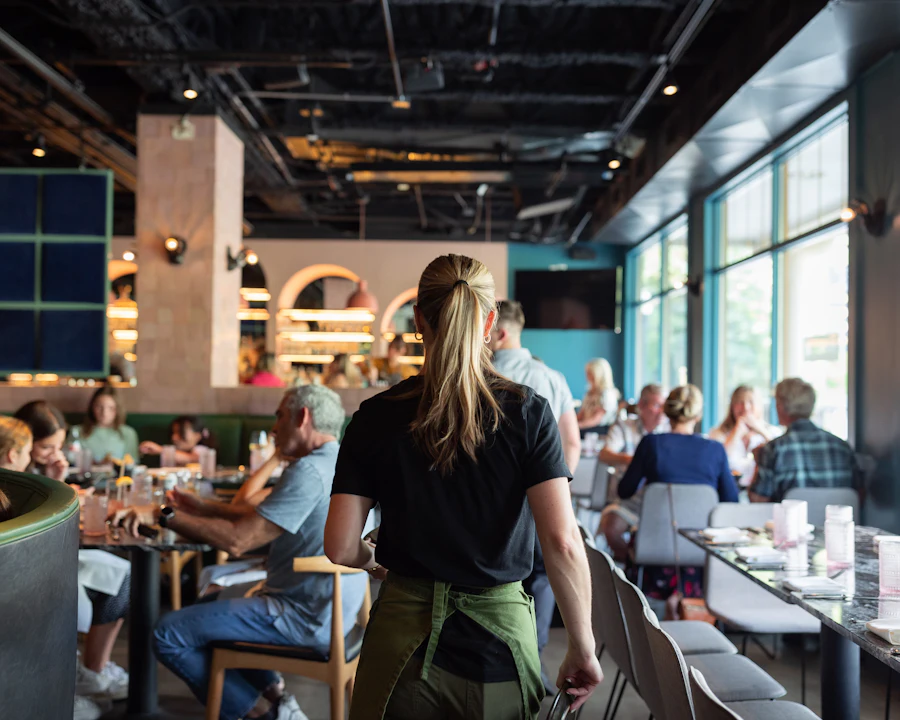
I was nineteen, or maybe twenty. The exact age matters less than the uniform: a stiff apron, non-slip shoes, and a smile that had to remain fixed regardless of what was happening behind it.
My first real job was waiting tables. It was not glamorous, and it was not easy. It was a masterclass in endurance. There were shifts where my feet ached so badly I could barely stand, days when the tips were meager, and moments when customers were unreasonably demanding. In those moments, the temptation to let the frustration show was a physical weight.
But I had been raised in Texas with a very clear, unspoken rule: you do not complain, and you do not ask for sympathy. You do the work.
So, I swallowed my pride. I hid my exhaustion. I learned that the smile was not just an expression; it was part of the uniform. It was a promise to the person sitting at the table that, for the next hour, their comfort was my only priority.
That job cost me a great deal in youthful impatience, but it gave me something far more valuable. It taught me the foundational rule of my entire career: show up prepared, put your best foot forward, and listen harder than anyone else in the room.
I did not know it then, but that restaurant floor was my first boardroom. The lessons I learned there are the exact same ones I rely on today as President and CEO of Neyius Hotel Group. The scale has changed, but the core of the work has not.
Reading a room
Hospitality is not a one-size-fits-all script. It is the art of acute observation.
On the restaurant floor, you learn very quickly how to read a room. You learn to notice the subtle cues that tell you what a guest actually needs, which is often different from what they ask for.
You learn to recognize the couple on a first date who wants excellent service but absolute privacy. You learn to spot the solo traveler who might appreciate a brief, warm conversation to break the silence of the room. You learn to sense the shift in energy at a table when a meal is delayed, and you know to address it with sincerity before it turns into a complaint.
This skill is not just about being a good server. It is about emotional intelligence. It is about understanding that people are complex, and that true service requires meeting them exactly where they are.
I carry this same hyper-awareness into my leadership today. When I walk into a meeting or visit one of our properties, I am not just looking at the spreadsheets or the operational metrics. I am reading the room. I am paying attention to the energy of the team. Who is speaking up? Who is holding back? Is there tension that needs to be addressed, or momentum that needs to be supported?
Knowing when to push forward and when to hold back is a skill forged in the crucible of customer service. You cannot lead people effectively if you do not know how to listen to them. And listening is not just about hearing the words; it is about understanding the context behind them.
The work guests never see
The guest only ever sees the final act.
They see the clean room, the perfectly plated meal, the seamless check-in. They do not see the early morning prep, the late-night cleanup, or the emotional regulation required from the staff to make it all look effortless.
This is the great, invisible engine of the hospitality industry. And it is the reason why I believe, with absolute certainty, that hospitality must begin with the people behind it.
You cannot demand warmth, grace, and attentiveness from your staff if you do not give them those same things in return. A team that feels undervalued, overworked, or unheard cannot possibly provide a genuine, welcoming experience to a guest. The warmth will be fake. The polish will be thin. And guests, much like restaurant patrons, can always tell when a smile does not reach the eyes.
This is why human-centered business is not just a buzzword to me. It is a necessity.
At Neyius, we talk constantly about treating the people who do the work as the absolute point of the enterprise. It means paying fairly, listening to their ideas, and creating an environment where they feel safe to speak up. It means recognizing that the housekeeper, the front desk agent, and the line cook are not just cogs in a machine; they are the architects of the guest experience.
When I host monthly fireside chats with our staff across our properties, I am not doing it for a photo opportunity. I am doing it because I know that the best ideas often come from the people closest to the work. I would rather hear a voice crack with genuine concern than hear a perfectly rehearsed, smoothed-over corporate update. Authenticity is the only foundation that holds real weight.
Lastly
I am no longer wearing the stiff apron or the non-slip shoes. My days are filled with acquisition strategies, financial reviews, and leadership decisions that impact hundreds of employees and thousands of guests.
But whenever I feel untethered, or whenever the complexity of corporate leadership threatens to obscure the truth, I go back to that restaurant floor.
I remember what it felt like to be the one serving. I remember the weight of the tray, the ache in my feet, and the quiet dignity of doing a hard job well.
It keeps me grounded. It reminds me that no matter how high I climb, my job is still, fundamentally, to serve. To show up prepared. To put my best foot forward. And to listen, always, to the people who make it all possible.